Unlocking Creativity with Online Analytics 3D Illustration for Design and Digital Projects
In today’s fast-paced digital world, visual content plays a crucial role in capturing attention, conveying complex ideas, and driving engagement. One of the most powerful tools available to designers, marketers, and content creators is Online Analytics 3D illustration. These illustrations are not only visually appealing but also highly versatile, making them suitable for a wide range of applications such as UI design, web design, app development, presentations, posters, social media advertising, and more.
What Is an Online Analytics 3D Illustration?
An Online Analytics 3D illustration is a digital artwork that represents data, processes, or concepts using three-dimensional visuals. It typically involves characters, scenes, or objects rendered in a stylized 3D format, often with vibrant colors and dynamic compositions. Unlike traditional flat illustrations, these designs add depth and realism, helping users better understand abstract or technical subjects through engaging visuals.
These illustrations are commonly used in fields like technology, education, marketing, and business to simplify complex topics. For example, a 3D illustration can show how data flows through an online analytics dashboard or demonstrate the components of a user interface in a more intuitive way.
Enhanced Visual Communication
One of the main advantages of using 3D illustrations is their ability to communicate information clearly and effectively. Whether you're designing an infographic, creating a presentation, or building a website, a well-crafted 3D illustration can break down complicated processes into digestible visual elements.
- Complex Data Made Simple: 3D illustrations help visualize data structures, algorithms, and systems that might be hard to explain with text alone.
- Increased Engagement: The realistic look and feel of 3D images attract more attention and keep viewers interested longer.
- Brand Consistency: Custom 3D illustrations allow you to maintain your brand's visual identity across different platforms and materials.
High-Quality Resolution for Professional Results
When it comes to professional use, resolution matters. Online Analytics 3D illustrations come in high-resolution formats (up to 3000x3000 px), ensuring they remain sharp and clear on any device or platform. This makes them ideal for print, digital displays, and large-format outputs such as billboards or banners.
The availability of both PSD and PNG files adds another layer of flexibility. PSD files let you edit layers and make customizations easily, while PNG files provide transparency and are perfect for embedding into websites or apps without background interference.
UI and Web Design
User Interface (UI) and web design benefit greatly from 3D illustrations. They can be used to represent features, services, or interactive elements in a more lifelike and engaging manner. For instance, a 3D illustration of a smartphone interacting with cloud-based analytics tools can instantly convey the concept of mobile integration in data analysis.
Designers often incorporate 3D graphics to create modern, immersive experiences that stand out from the typical flat design trends. These illustrations can be layered with animations to enhance interactivity, especially in web and app environments.
App Development and Mobile Interfaces
Mobile apps rely heavily on visuals to guide users and highlight functionality. A 3D illustration can showcase an app's workflow, features, or benefits in a way that feels intuitive and user-friendly. When presenting an app to stakeholders or end-users, using a 3D graphic can help them grasp the concept quickly and visualize the final product before it's built.
Moreover, since many mobile interfaces now include motion and depth effects, 3D illustrations align perfectly with these design trends. Their adaptability ensures they can fit seamlessly into both static and animated content.
Presentations and Reports
Whether you’re giving a business presentation or preparing a detailed report, 3D illustrations can elevate your message. They add a professional touch and help emphasize key points without overwhelming the audience with too much text.
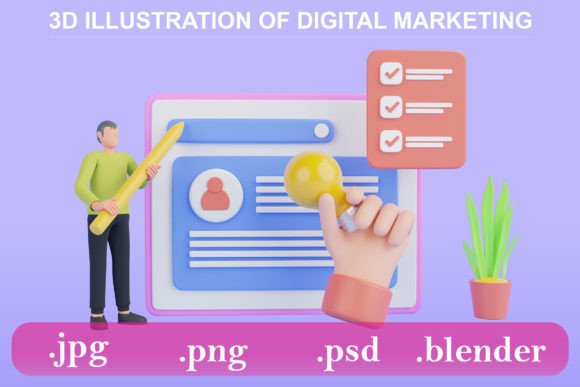
For example, if you're explaining how customer behavior affects sales performance, a 3D illustration showing people interacting with a digital platform could serve as a visual metaphor for data collection and analysis. This kind of imagery makes your content more memorable and impactful.
Social Media Advertising and Marketing
With the rise of visual-centric platforms like Instagram, Facebook, and LinkedIn, businesses are constantly looking for ways to stand out. A 3D illustration can be the difference between a forgettable post and one that grabs attention and drives action.
These illustrations are scalable and adaptable, so they work equally well in a full-page ad or a mobile-optimized carousel. The high resolution ensures clarity even on smaller screens, and the transparent PNG format allows for easy integration into existing layouts and branding guidelines.
Content Creators and Bloggers
Content creators who focus on tech, data science, or digital marketing often need to explain intricate topics in simple terms. A 3D illustration can help illustrate those concepts, making articles and videos more informative and engaging. For instance, a blog about SEO strategies might use a 3D image of a website being analyzed by an AI character to symbolize data-driven optimization.
Businesses and Entrepreneurs
Entrepreneurs and startups can leverage 3D illustrations to build a strong visual presence. From landing pages to investor pitches, these graphics help tell a compelling story. A company selling analytics software, for example, could use a 3D scene where colorful data streams feed into a futuristic dashboard, instantly communicating the value of their product.
Education and Training
In e-learning platforms and training modules, 3D illustrations can simplify difficult subjects. They help students and professionals visualize abstract theories or complex workflows, leading to better comprehension and retention. An educational course on data visualization might use a series of 3D illustrations to show how raw data transforms into actionable insights.
Graphic Designers and Agencies
For graphic designers, 3D illustrations open up new creative possibilities. They can be used to create unique icons, infographics, or background elements that set their work apart. Offering clients access to 3D assets like those found in Online Analytics collections gives agencies a competitive edge by providing high-quality, ready-to-use resources that speed up the design process.
Understand Your Purpose
Before selecting a 3D illustration, define what you want to achieve. Are you trying to explain a concept? Promote a service? Enhance a design element? Knowing your purpose will help you choose the right style and subject matter.
Match the Style to Your Brand
Consistency is key in branding. Look for illustrations that match your brand's color palette, tone, and overall aesthetic. Some 3D illustration sets offer customizable options, allowing you to tweak colors or layout to ensure seamless integration.
Check File Formats and Quality
Make sure the illustrations you select are provided in the right file types for your project. If you need editable layers for customization, go for the PSD version. For final deliverables, the PNG format with transparency is usually best. Also, verify that the resolution is sufficient for your intended use—especially if printing or displaying at large sizes.
Consider Scalability
A good 3D illustration should scale well across different mediums. Whether it’s displayed on a phone screen, a desktop monitor, or printed on a poster, the image should retain its quality and clarity. High-resolution files ensure this level of scalability, making them suitable for both digital and physical projects.
Common Misconceptions About 3D Illustrations
Despite their popularity, there are still some misconceptions around 3D illustrations that prevent people from fully utilizing their potential. Here are a few to consider:
- They’re Only for Big Budgets: While custom 3D modeling can be expensive, pre-made 3D illustrations from online libraries are affordable and accessible for small businesses and individuals.
- They Require Advanced Skills: Many 3D illustrations come in ready-to-use formats, so no advanced 3D design knowledge is needed to implement them in your project.
- They’re Too Cartoony for Professional Use: Modern 3D illustrations come in a variety of styles—from sleek and minimalist to detailed and realistic—ensuring they fit any professional context.
Where to Find and How to Use 3D Illustrations
Thanks to the growth of online design marketplaces, finding high-quality 3D illustrations has never been easier. Platforms like Online Analytics offer curated collections specifically tailored for design needs, including UI/UX, web design, and marketing materials. These illustrations are optimized for various uses and are designed to meet industry standards in both form and function.
Once you’ve downloaded the illustration files, here’s how you can use them:
- Edit and Customize: Open the PSD file in Adobe Photoshop to adjust colors, shapes, or composition to suit your specific needs.
- Use as Backgrounds or Icons: Extract individual elements from the illustration to use as standalone icons or decorative backgrounds.
- Integrate into Presentations: Add the PNG files to PowerPoint or Google Slides for a polished, professional look.
- Create Social Media Content: Resize and crop the illustration for different social media platforms, using the transparent PNG to blend with your brand colors or other graphics.
Boosting Creativity and Productivity with Ready-Made 3D Assets
Using pre-made 3D illustrations like those offered by Online Analytics can significantly boost productivity. Instead of spending hours designing from scratch, you can focus on refining the message and improving the overall user experience. This approach saves time while maintaining a high standard of quality.
Additionally, having a library of 3D illustrations on hand means you can quickly prototype ideas or test different visual approaches. This flexibility is essential for agile design teams and solo creators alike.
Real-World Examples of 3D Illustrations in Action
To give you a clearer idea of how 3D illustrations can be applied, here are a few examples:
- Marketing Campaigns: A SaaS company uses a 3D illustration of a person receiving data insights on a tablet to promote their analytics tool.
- Educational Websites: A learning platform includes 3D visuals to demonstrate how machine learning models analyze user behavior.
- App Onboarding Tutorials: A finance app uses a series of 3D illustrations to guide users through the setup process, making it feel interactive and fun.
- Infographics: A health blog integrates 3D graphics to show how wearable devices track fitness metrics and send data to a central dashboard.
Conclusion: Embracing the Future of Visual Design
As we continue to move toward a more visual and interactive digital landscape, the importance of 3D illustrations in design and communication cannot be overstated. Whether you're a designer, marketer, educator, or entrepreneur, incorporating 3D visuals into your projects can enhance understanding, improve engagement, and elevate your brand’s aesthetics.
By leveraging high-resolution 3D illustrations from sources like Online Analytics, you gain access to powerful tools that combine creativity with clarity. These assets are not just eye-catching—they’re practical, scalable, and adaptable to a wide array of needs. So next time you're working on an app, a website, a presentation, or a social media campaign, consider how a 3D illustration could bring your vision to life.
Ready to explore the possibilities? Start with a 3D illustration collection and see how it transforms your next project into something truly remarkable.