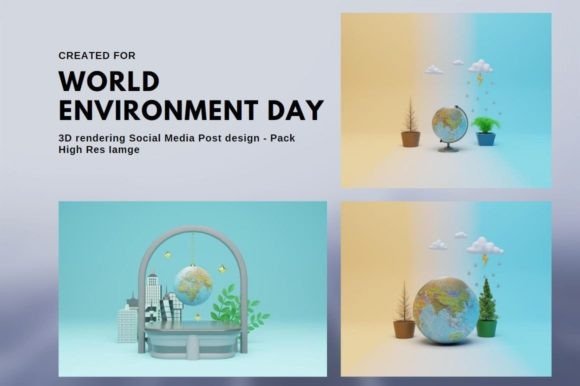
World Environment Day Concept: A Powerful Tool for Creative and Business Communication
World Environment Day (WED) is more than just an annual event—it’s a global movement that inspires action for the planet. Celebrated on June 5th every year, it serves as a platform to raise awareness and drive positive change in environmental protection. The World Environment Day Concept has evolved into a strategic tool for professionals across various industries, especially in creative fields like social media marketing, graphic design, and digital content creation. As businesses and individuals seek ways to align with sustainability values and communicate them visually, leveraging WED through 3D rendering post designs has become increasingly relevant.
The Rise of Visual Storytelling in Sustainability
In today’s fast-paced digital landscape, attention spans are short, and visual impact is key. Whether you're a marketer, entrepreneur, or freelancer, the ability to convey complex ideas quickly and effectively through images can make all the difference. This is where the World Environment Day Concept meets modern design trends. By incorporating this theme into your social media visuals, you’re not only promoting awareness but also aligning your brand with a growing consumer demand for eco-conscious messaging.
3D rendering has emerged as one of the most powerful mediums for visual storytelling. Unlike traditional photography or basic illustrations, 3D renders offer complete control over lighting, color, composition, and detail—making them ideal for crafting compelling narratives around sustainability. With high-resolution JPG files, these designs maintain clarity and professionalism across platforms, from Instagram posts to LinkedIn banners.
Why the World Environment Day Concept Matters Now
Environmental consciousness is no longer a niche interest; it's a mainstream expectation. Consumers are actively seeking brands that demonstrate responsibility and transparency regarding their environmental footprint. According to recent studies, over 60% of global consumers prefer to support companies that take steps toward sustainability. For professionals in the creative and business sectors, embracing the World Environment Day Concept isn’t just about ethics—it’s about staying competitive.
Marketers use WED-themed campaigns to highlight green initiatives, while entrepreneurs leverage it to showcase eco-friendly products. Freelancers and designers, on the other hand, find new opportunities by creating assets that help others communicate their commitment to the environment. The concept resonates because it’s actionable, relatable, and universally understood. It provides a shared language for discussing climate action, biodiversity, and sustainable development.
Modern Post Templates: Bridging Creativity and Purpose
A modern post template designed around the World Environment Day Concept combines aesthetics with intention. These templates often feature clean layouts, vibrant colors inspired by nature, and impactful typography that emphasizes key messages such as “Protect Our Planet” or “Act Now for Future Generations.” They are optimized for mobile viewing and include elements like infographics, data visualizations, and symbolic imagery that resonate with diverse audiences.
High-resolution JPG formats ensure that these designs look sharp and professional on any device, from smartphones to desktops. For creators who rely on visual appeal to engage followers, using a modern post template with WED themes means delivering content that looks polished and communicates purpose simultaneously. These templates can be customized with brand logos, product shots, or client-specific messaging, making them adaptable for different industries and purposes.
Practical Applications Across Industries
- Marketing: Brands use WED-themed posts to launch green campaigns, promote Earth-friendly products, or share behind-the-scenes efforts to reduce waste and emissions.
- Entrepreneurship: Startups in the sustainable sector utilize these designs to build trust and visibility, highlighting their mission and values in a visually appealing way.
- Graphic Design: Designers create custom templates or renderings that allow clients to participate in global conversations without needing deep expertise in 3D modeling or environmental science.
- Freelancing: Offering pre-made WED post designs is a lucrative service for freelancers, especially those specializing in eco-conscious branding or corporate social responsibility.
- Technology: As 3D rendering software becomes more accessible, even non-designers can create sophisticated visuals that reflect the World Environment Day Concept, democratizing access to quality content.
Changing Workflows and Expectations
The shift toward sustainability in both personal and professional spheres has led to evolving workflows in content creation. Businesses now expect marketing teams to produce not just promotional material, but also educational and inspirational content that reflects their values. Social media managers must balance aesthetics with authenticity, ensuring that every post tells a story that aligns with broader goals.
This is where the World Environment Day Concept shines. It offers a ready-made framework for content that is both timely and timeless. As people become more environmentally aware, they expect to see this reflected in the brands they follow. Creators who understand how to integrate WED themes into their work will find themselves better positioned to meet these expectations and stand out in crowded feeds.
Design Trends Aligned with Environmental Messaging
- Nature-Inspired Color Palettes: Greens, blues, and earth tones dominate WED-themed designs, evoking feelings of growth, renewal, and harmony with the planet.
- Eco-Friendly Imagery: Visuals featuring trees, oceans, wildlife, and renewable energy sources help reinforce the message of conservation and care.
- Minimalist Layouts: Clean, uncluttered designs allow the core message of WED to take center stage, enhancing readability and emotional impact.
- Interactive Elements: Some 3D renders include animated or interactive components, such as rotating objects or layered infographics, to boost engagement on digital platforms.
For example, a tech company launching a new line of energy-efficient devices might use a 3D-rendered post showing a solar-powered home against a backdrop of lush forests. A fashion brand committed to ethical sourcing could feature a model wearing recycled fabric garments, surrounded by symbolic elements like leaves or water droplets. These aren't just eye-catching—they're meaningful.
Creating Impactful Content with 3D Rendering
3D rendering allows for the creation of hyper-realistic or stylized visuals that can be tailored to fit any narrative. When applied to the World Environment Day Concept, it enables brands and creators to visualize abstract ideas—like carbon neutrality or reforestation—in tangible, engaging ways. High-resolution JPG outputs ensure these designs remain crisp and clear, regardless of the platform or screen size.
One practical observation is that 3D-rendered WED posts tend to perform better in terms of shares and likes compared to generic stock images. Why? Because they feel original and authentic. People recognize when a brand is putting effort into its messaging, and that effort builds credibility and connection.
Moreover, as AI tools continue to improve, generating these types of visuals is becoming faster and more cost-effective. Entrepreneurs and marketers can now create multiple variations of a WED-themed post in hours rather than days, allowing for more frequent and targeted outreach. This trend supports the idea that the World Environment Day Concept is not just a one-day affair but a continuous part of brand identity and public engagement.
Real-World Examples of WED-Themed 3D Renderings
- A nonprofit organization used a 3D-rendered image of melting glaciers to illustrate the urgency of climate action. The post included a call-to-action encouraging users to sign a petition for stricter environmental policies.
- An architecture firm showcased a zero-waste building design using 3D visuals, which helped secure new clients interested in sustainable construction.
- A beauty brand created a series of 3D-rendered posts highlighting plant-based ingredients and cruelty-free processes, reinforcing their commitment to ethical production.
These examples show how the World Environment Day Concept can be woven into industry-specific narratives, providing both relevance and resonance. The use of 3D rendering elevates the message beyond words, making it more memorable and shareable.
Connecting with Broader Developments
The World Environment Day Concept is part of a larger movement toward sustainable communication and eco-aware branding. As governments and organizations set ambitious climate goals, the need for consistent, impactful messaging grows. Social media has become a battleground for influence, and those who can harness the power of visual storytelling will lead the conversation.
Furthermore, the rise of greenwashing has made it essential for brands to back up their claims with real action—and equally real visuals. A well-designed 3D-rendered post can serve as proof of a brand’s commitment to sustainability, helping to differentiate genuine efforts from superficial ones. In this context, the World Environment Day Concept becomes a touchstone for authenticity and accountability.
Future-Proofing Your Brand with WED Themes
As we move further into the decade, sustainability will only grow in importance. Incorporating the World Environment Day Concept into your design strategy helps future-proof your brand against shifting consumer preferences and regulatory changes. It positions you as a proactive participant in the global conversation about the environment, rather than a passive observer.
Professionals who stay ahead of this curve will find themselves in higher demand. Whether you’re designing for a client or building your own portfolio, having a collection of high-quality, WED-themed 3D renderings adds value and versatility. These assets can be reused throughout the year, not just on June 5th, to maintain a consistent green message across campaigns.
Conclusion
The World Environment Day Concept is more than a theme—it’s a lens through which we can view our responsibilities and opportunities in the digital age. As industries evolve and audiences become more discerning, the ability to communicate sustainability effectively is a critical skill. By using modern 3D rendering techniques and high-resolution JPG formats, professionals can craft powerful, visually stunning posts that align with global environmental goals and elevate their brand’s voice.
Whether you're a designer looking to expand your offerings, a marketer aiming to connect with eco-conscious consumers, or an entrepreneur building a green-focused business, integrating the World Environment Day Concept into your social media profile is a smart investment. It reflects not only current trends but also the direction in which the world is moving—toward a more responsible, sustainable future.